About
Education2002-2003: Postdorctor, Dept of Physiology & Biophysics,University of Washington, Seattle, USA, Supervisor: Marc Binder 1996-2001: PhD, Dept of Physiology, University of Manitoba, Winnipeg, Canada, Supervisor: Larry Jordan 1992-1996: MSc, Dept of Applied Mathematics, University of Manitoba, Winnipeg, Canada, Supervisor: Peter Aitchison 1978-1982: BSc, Dept of Mathematics, Yunnan University, Kunming, China WorkExperience2013-Present: Zijiang Endowed Professor, School of Communication and Electronic Engineering, East China Normal University, Shanghai, China 2003-2013: Senior researcher, Spinal Cord Reseach Center, University of Manitoba, Winnipeg, Canada 2002-2003: Postdorctor, Dept of Physiology and Biophysics,University of Washington, Seattle, USA ResumeI am a native of Kunming, Yunnan Province, and have long been engaged in interdisciplinary research. In 1992, I pursued advanced studies and worked in Canada and the United States, and later settled in Canada. I returned to China in 2013 and joined East China Normal University, where I have conducted research on motor control and motor intervention of the spinal neural system. My research aims to explore the mechanisms underlying the generation, coordination and control of locomotion in mammals on the basis of ion channels, cell membrane properties and neural networks; to investigate the principles of adaptation of the nervous system induced by motor intervention; and on this foundation, to develop a spinal cord-like intelligent motor control system based on spinal neural networks. Over the past decade, supported by the National Natural Science Foundation of China, my major research achievements are summarized as follows: (1) Revealed the physiological principles underlying the interactive regulation between the brainstem cholinergic and serotonergic nervous systems, and discovered the neural mechanisms by which cholinergic muscarinic receptor subtypes modulate the regulation of excitability of serotonergic neurons and control of locomotor movement. (2) Found the mechanisms underlying plasticity of the brainstem and spinal neural systems induced by motor intervention at the levels of cellular morphology and ion channels. (3) Identified a voltage-gated sodium channel with strong resistance to tetrodotoxin (TTX), dihydropyridine (DHP) and riluzole (RIL) in midbrain serotonergic neurons and spinal neurons of mice. (4) Predicted and verified the regulatory roles of five ion channels (NaT, NaP, CaL, K(DR) and K(AHP)) in regulating locomotion through physiological experiments and model simulation. These findings have advanced the academic community’s understanding of the regulation of cellular excitability, spinal motor control, and the mechanisms underlying plasticity of the motor system. Other Appointments1. Membership of Society for Neuroscience (SfN) since 1997 2. Membership of The Chinese Neuroscience Society (CNS) since 2015 3. Membership of American Physiological Scociety (APS) since 2018 (Member of the Sections of Cell and Molecular Physiology and Environmental & Exercise Physiology) Research FieldsMy research focuses on motor control and exercise-induced adaptation of spinal motor system. Locomotion in vertebrates is initiated and regulated by the Mesencephalic Locomotor Region (MLR) in the midbrain, and executed and modulated by neural network populations within the spinal cord known as the Central Pattern Generator (CPG). The CPG functions as a core regulator of timing, rhythm generation, and motor control during locomotion. It consists of multi-layered neuronal populations distributed along the ventral thoracic and lumbar segments of the spinal cord. These neurons possess distinctive membrane properties, form synaptic connections with both excitatory and inhibitory pathways, and are modulated by a variety of neurotransmitters. Although the structural organization of the CPG has been well characterized; the endogenous capability of spinal neural networks to initiate and drive limb locomotion remains poorly understood, due to the intrinsic complexity of neural networks and limitations in experimental techniques. My research aims to elucidate this intrinsic capability at the neuronal and ion channel levels, and explore the fundamental mechanisms underlying locomotion generation; to reveal the mechanisms of adaptation in the motor nervous system induced by exercise intervention; and to translate these physiological principles into the design and development of artificial intelligent motor control systems, so as to establish the core framework of brain-inspired intelligent motor control systems. Accordingly, my research covers four main areas: exercise intervention, intelligent bionics, ion channel modulation, and cell identification. Exercise Intervention This theme investigates how chronic exercise modulates and remodels the membrane properties of brainstem–spinal cord neurons at the ion channel and cellular morphological levels, reshaping neural adaptability and enabling the motor system to respond more efficiently to environmental changes. Intelligent Bionics (Spinal Cord-Inspired Research) This work examines the computational properties of neurons and neural networks, and analyzes ion channel-based neural information encoding and decoding mechanisms. By adopting bioinformatic simulation techniques and interdisciplinary approaches, it explores physiological and technical strategies for spinal cord-inspired bionics. Large-scale neural network models are established from single neurons to network assemblies and from the brainstem to the spinal cord, supporting the integrated design of motor control systems for multi-legged intelligent robots. Ion Channel Modulation This direction studies the biophysical properties of ion channels in brainstem–spinal cord neurons, and investigates how ion channels, as a core regulatory mechanism, modulate neuronal excitability and thereby participate in the control and coordination of locomotion. Cell Identification This research identifies and phenotypically characterizes brainstem–spinal cord neurons involved in the initiation, regulation, execution and coordination of locomotion. It analyzes their functional roles in locomotor behavior, and explores how their membrane properties are modulated by neurotransmitters to mediate motor control.My primary research methodologies are electrophysiology and computational neuroscience. This interdisciplinary approach integrates neurophysiology, biophysics, mathematical modeling, and computer simulation, and represents an extended application of bioinformatics in spinal neural system research. The methodological framework combines patch-clamp recording with mathematical modeling, takes neural system simulation as a core platform, and employs neurophysiological and bio-inspired techniques to unravel the mechanisms and principles of spinal motor control. The ultimate goal of my research is to clarify the mechanisms underlying the generation, control and coordination of locomotion, and to reveal the rules governing adaptation of the spinal nervous system induced by exercise intervention. The research findings can provide neurophysiological evidence and theoretical references for adolescent health assessment, public physical exercise guidance, rehabilitation therapy for patients with spinal cord injury, and the research and development of intelligent robots. Enrollment and TrainingCourse1. Foundation of Neurophysiology 2. Computational Neuroscience 3. Artificial Intelligence 4. Bioinformatics 5. Engineering Ethics 6. Scientific Writing 7. Professional English for Communication Engineering 8. Sport Professional English 9. Introduction to Kinesiology ScientificThe National Natural Science Foundation of China (32471187): General Program, Principal Investigator, Jan. 2025 - Dec. 2028 The National Natural Science Foundation of China (32171129): General Program, Principal Investigator, Jan. 2022 - Dec. 2025 The National Natural Science Foundation of China (31571222): General Program, Principal Investigator, Jan. 2016 - Dec. 2019 Academic AchievementsSelected Publication (2018-2025) Yi Cheng, Yue Dai*, Renkai Ge, Qiang Zhang (2025) Synergistic Mechanisms of Medullary Cholinergic-Serotonergic Pathway Interactions in Regulating Neuronal Excitability and Locomotor Activities Communications Biology (2025) 8:1788 (Q1, IF=5.8) https://doi.org/10.1038/s42003-025-09217-y Yi Cheng, Xingyu Wang, Qiang Zhang, Renkai Ge, Mei Zhou, Yue Dai* (2025) Multiple Patterns of Persistent Inward Currents with Multiple Types of Repetitive Firings in Medullary Serotonergic Neurons of Mice: An Experimental and Modeling Study PLOS Computational Biology 21(4): e1012918 (Q1, IF=4.3) https://doi.org/10.1371/journal.pcbi.1012918 Yue Dai*, Yi Cheng, Renkai Ge, Ke Chen and Liming Yang (2024) Exercise-induced adaptation of neurons in the vertebrate locomotor system Journal of Sport and Health Science 13(2) 160-171, 2024 (Q1, IF=12.2) https://www.sciencedirect.com/science/article/pii/S2095254623001047 Yue Dai (2022) Book: Intelligent System for Motor Control, Shanghai Science and Technology Academic Press, 1st Edition, 2022. Ke Chen and Yue Dai* (2022) Chronic exercise increases excitability of lamina X neurons through enhancement of persistent inward currents and dendritic development in mice Journal of Physiology 600 (16): 3775-3793, 2022 (Q1, IF=6.2) https://physoc.onlinelibrary.wiley.com/doi/10.1113/JP283037 Qiang Zhang, Yue Dai* , Zhou Junya, Renkai Ge, Yiyun Hua, Randall K Powers and Marc D Binder (2022) The Effects of Membrane Potential Oscillations on the Excitability of Rat Hypoglossal Motoneurons Frontiers in Physiology 13:955566 (Q2, IF=4.8) https://www.frontiersin.org/articles/10.3389/fphys.2022.955566/abstract Qiang Zhang, Yi Cheng, Mei Zhou and Yue Dai* (2022) Locomotor pattern and force generation modulated by ionic channels: a computational study of spinal networks underlying locomotion. Frontiers in Computational Neuroscience 16:809599 (Q2, IF=3.4) https://www.frontiersin.org/articles/10.3389/fncom.2022.809599/full Ke Chen, Xing Ge and Yue Dai* (2022) Cholinergic modulation of persistent inward currents is mediated by activating muscarinic receptors of serotonergic neurons in the brainstem of ePet-EYFP mice. Experimental Brain Research 240: 1177-1189, 2022 (Q3, IF=2.1) https://doi.org/10.1007/s00221-022-06322-w Yi Cheng, Nan Song, Renkai Ge, and Yue Dai* (2021) Serotonergic Modulation of Persistent Inward Currents in Serotonergic Neurons of Medulla in ePet-EYFP Mice. Frontiers in Neural Circuits 15: 657445 (Q2, IF=3.5) https://doi.org/10.3389/fncir.2021.657445 Renkai Ge and Yue Dai* (2020) Three-week treadmill exercise enhances persistent inward currents, facilitates dendritic plasticity, and upregulates the excitability of dorsal raphe serotonin neurons in ePet-EYFP mice. Frontiers in Cellular Neuroscience 14:575626 (Q1, IF=5.5)https://doi.org/10.3389/fncel.2020.575626 Qiang Zhang and Yue Dai* (2020) A modelling study of spinal motoneuron recruitment regulated by ionic channels during fictive locomotion. Journal of Computational Neuroscience 48 (4): 409-428, 2020 (Q3, IF=1.8) https://doi.org/10.1007/s10827-020-00763-4 Yi Cheng, Qiang Zhang and Yue Dai* (2020) Sequential Activation of Multiple Persistent Inward Currents Induces Staircase Currents in Serotonergic Neurons of Medulla in ePet-EYFP Mice. Journal of Neurophysiology 123:277-288, 2020 (Q3, IF=2.7) https://doi.org/10.1152/jn.00623.2019 Yi Cheng, Renkai Ge, Ke Chen, and Yue Dai* (2019) Modulation of NMDA-mediated intrinsic membrane properties of ascending commissural interneurons in neonatal rat spinal cord. Journal of Integrative Neuroscience 18 (2): 163-172, 2019 (Q3, IF=2.1) https://doi.org/10.31083/j.jin.2019.02.129 Ke Chen, Renkai Ge, Yi Cheng, and Yue Dai* (2019) Three-week treadmill training changes the electrophysiological properties of spinal interneurons in the mice. Experimental Brain Research 237 (11), 2925-2938, 2019 (Q3, IF=2.1) https://link.springer.com/article/10.1007/s00221-019-05647-3 Renkai Ge, Ke Chen, Yi Cheng and Yue Dai* (2019) Morphological and Electrophysiological Properties of Serotonin Neurons with NMDA Modulation in the Mesencephalic Locomotor Region of Neonatal ePet-EYFP Mice. Experimental Brain Research. 237 (12), 3333-3350, 2019 (Q3, IF=2.1) https://link.springer.com/article/10.1007/s00221-019-05675-z Yue Dai*, Yi Cheng, Brent Fedirchuk, Larry M. Jordan, and Junhao Chu (2018) Motoneuron Output Regulated by Ionic Channels: A Modelling Study of Motoneuron Frequency-Current Relationships during Fictive Locomotion. Journal of Neurophysiology 120:1840-1858, 2018 (Q3, IF=2.7) https://doi.org/10.1152/jn.00068.2018 Abstracts for Conference Yue Dai*; Yi Cheng; Xingyu Wang; Liming Yang (2024) A modeling study of multiple patterns of persistent inward currents with manifold types of repetitive firings in brainstem serotonergic neurons of mice The 17th Annual Meeting of Chinese Neuroscience Society (CNS 2024) P-375
Xiaoyu Zhang; Yueru Chen; Yi Cheng; Liming Yang; Yue Dai* (2024) Effects of channel modulation on the recruitment of motoneuron pools during white-noise-induced membrane potential oscillation The 17th Annual Meeting of Chinese Neuroscience Society (CNS 2024) P-399
Liming Yang; Yi Cheng; Xinyi Wei; Yueru Chen; Xiaoyu Zhang; Yue Dai* (2024) Synchronizing effects of chronic exercise on neurons of mesencephalic locomotor region and spinal cord in miceThe 17th Annual Meeting of Chinese Neuroscience Society (CNS 2024) P-397
Yueru Chen; Xiaoyu Zhang; Yi Cheng; Liming Yang; Yue Dai* (2024) The effects of membrane potential oscillation on rhythmic generation in the spinal interneurons coupled by reciprocal inhibition The 17th Annual Meeting of Chinese Neuroscience Society (CNS 2024) P-376
Yi Cheng; Liming Yang; Renkai Ge; Yue Dai* (2024) The interaction of cholinergic and serotonergic systems in the brainstem regulates locomotor rhythm in mice The 17th Annual Meeting of Chinese Neuroscience Society (CNS 2024) P-373
Xinchen Pi; Yi Cheng; Yue Dai* (2024) Ionic Channel Mechanisms Underlying Recruitment of Spinal Motoneurons and Force Generation of Skeletal Muscle in the Mammals. 2024 China Biomedical Engineering Conference & Medical Innovation Summit (BME 2024) PO1131
Xiaoyu Zhang; Yueru Chen; Yi Cheng; Liming Yang; Yue Dai* (2024) Model Simulation Study on the Effect of Ion Channel Oscillations Induced by White Noise on Motoneurons Pool Recruitment 2024 China Biomedical Engineering Conference & Medical Innovation Summit (BME 2024) PO1134
Yi Cheng; Yue Dai* (2024) Persistent inward currents drive fictive locomotion in the isolated spinal cord by regulating the input-output relationship of motoneurons in rats 2024 China Biomedical Engineering Conference & Medical Innovation Summit (BME 2024) PO1132 Yue Dai*and Yi Cheng (2019) Serotonergic Modulation of Tetrodotoxin-, Dihydropyridine-, and Riluzole-Resistant Persistent Inward Current in Serotonergic Neurons in the Medulla of ePet-EYFP Mice. The 13th Biennial Conference of Chinese Neuroscience Society (CNS 2019) P-078. Yi Cheng, Renkai Ge, Ke Chen, Qiang Zhang and Yue Dai* (2019) Multiple Components of Persistent Inward Currents with Serotonergic Modulation in Serotonergic Neurons of Medulla in ePet-EYFP Mice. The 13th Biennial Conference of Chinese Neuroscience Society (CNS 2019) P-079. Renkai Ge, Yi Cheng, Ke Chen, Qiang Zhang, Dongyan Yang and Yue Dai * (2019) Three-week treadmill training enhances persistent inward currents of raphe serotonergic neurons in ePet-EYFP mice.The 13th Biennial Conference of Chinese Neuroscience Society (CNS 2019) P-080. Ke Chen, Ge Xing, Renkai Ge, Yi Cheng, Zhang Qiang and Yue Dai * (2019) Cholinergic Modulation of Persistent Inward Currents is Mediated by Activating Muscarinic Receptors of Serotonergic Neurons in the Brainstem of ePet-EYFP Mice The 13th Biennial Conference of Chinese Neuroscience Society (CNS 2019) P-081. Qiang Zhang, Dongyan Yang, Xingyu Wang and Weihang Xu and Yue Dai * (2019)A Simulation Study of Spinal Motoneuron Recruitment Regulated By Ionic Channels. The 13th Biennial Conference of Chinese Neuroscience Society (CNS 2019) P-082. Dongyan Yang, Renkai Ge, Qiang Zhang, Xingyu Wang and Weihang Xu and Yue Dai * (2019) A Modeling Study of NMDA Modulation of Serotonergic Neurons in Mesencephalic Locomotor Region in ePet EYFP Mice. The 13th Biennial Conference of Chinese Neuroscience Society (CNS 2019) P-084. Yi Cheng, Ren-Kai Ge and Yue Dai* (2017) The mechanisms underlying the cholinergic modulation of 5-HT neurons in the brainstem of ePet-EYFP mice. The 12th Biennial Conference of Chinese Neuroscience Society (CNS 2017)P-215. Ke Chen, Yi Cheng, Nan Song, Xing Ge and Yue Dai* (2017) Effects of three weeks of-treadmill training on the electrophysiological properties of spinal interneuron in the mice. The 12th Biennial Conference of Chinese Neuroscience Society (CNS 2017)P-213. Renkai Ge, Yi Cheng, Shengkui Yang, Ke Chen, Nan Song, Xing Ge and Yue Dai* (2017) Electrophysiological and NMDA modulatory properties of neurons in the mesencephalic locomotor region of ePet-EYFP neonatal mice. The 12th Biennial Conference of Chinese Neuroscience Society (CNS 2017) P-216. Yue Dai* and Yi Cheng (2017) Motoneuron Output Regulated by Ionic Channels: A Modelling Study of Motoneuron Frequency-Current Relationships during Fictive Locomotion. The 12th Biennial Conference of Chinese Neuroscience Society (CNS 2017)P-212. Yue Dai*, Yang S, Chen K, Ge R, Cheng Y, Song N and Ge X (2016) Characterization of Serotonergic Neurons in the Medulla of ePet-EYFP Mice. Society for Neuroscience (SFN) Abs 687.10 Yue Dai*and Jordan LM (2014) Activation of muscarinic receptors underlies cholinergic modulation of serotonergic neurons in the brainstem of ePet-EYFP mice.Society for Neuroscience (SFN) Abs 507.20 -------------------------------------------------------------------------------------- Honor
|
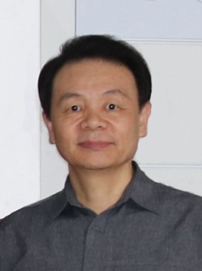 |
Yue Dai, professor |
|
|