
个人资料
教育经历2014-09 至 2021-01, 中国科学院上海营养与健康研究所, 与上海科技大学联合培养,生物化学与分子生物学, 博士 工作经历2026-01 至今,华东师范大学药学院,研究员 2020-11 至 2025-11,Weill Cornell Medicine,博士后 个人简介段晓华,华东师范大学药学院研究员,任药学和生物与医药方向博士生导师。国家级海外高层次人才获得者,上海市海外高层次人才获得者等。致力于类器官疾病模型构建的基础与应用研究,为系统探讨基因和/或环境因素在肿瘤的发生发展和病毒感染性疾病中的作用提供理论基础和关键技术平台,并基于这些疾病模型建设高通量药物筛选平台,开发新的治疗方法和策略。申请人已发表SCI期刊论文20篇,其中以第一作者(含共同第一作者)在Nature, Cell Stem Cell, Cell Reports, Oncogene等期刊上发表研究论文11篇,并以共同作者在Nature Chemical Biology,Nature Cell Biology,Cell Stem Cell等期刊发表论文9篇。其中,2篇研究论文为ESI高被引文章(分别 322 次和 452 次),1篇文章入选Cell Stem Cell Best of 2020。受邀在Journal of Molecular Cell Biology上发表特约评论;在Frontiers in Chemistry发表综述。作为发明人申请美国专利1项。研发出的抗病毒抑制剂Imatinib被世界卫生组织采纳开展COVID-19临床试验研究。来自荷兰、西班牙的多中心临床试验证明Imatinib会使COVID-19住院患者获益。 社会兼职研究领域
招生与培养长年接收各层次简历投递,副研究员,博士后,博士,硕士,本科等。 开授课程科研项目Science Fund Program for Excellent Young Scientists (Overseas), NSFC,2024 Shanghai BaiYuLan Talent Plan (Overseas),2024 学术成果Huang Q#, Duan X.#, Andrykovich K#, Chen Y#, Ge X, Wogram E, Ma H, Friesen M, Wang D, Yao H, Huang Y, Williamson I, Ma L, Wang Z, Hsu D, Clevers H, Chen S, Jaenisch R, Shen X. Establishing Inter-Species Chimera with Organoid Engraftment. Nature Biotechnology. 2025 (In revision) Nature NEWS: Mice with human cells developed using ‘game-changing’ technique We developed novel human-mouse chimeras by injecting human induced pluripotent stem cell (hiPSC)-derived organoids into the amniotic fluid of pregnant mice. This approach resulted in tissue-specific tropism, whereby human cells were only detected in organs of baby mice that matched the type of transplanted organoids. For now, we can generate the mice with a sprinkling of human cells in their intestines, liver and brain. Duan X.#, Zhang T.#, Feng LL#, de Silva N, Greenspun B, Wang X, Moyer J, Martin ML, Chandwani R, Elemento O, Leach SD, Evans T, Chen S, Pan FC. A pancreatic cancer organoid platform identifies an inhibitor specific to mutant KRAS. Cell Stem Cell. 2024 Jan 4;31(1):71-88.e8. doi:10.1016/j.stem.2023.11.011. Highlighted by Cell Stem Cell Preview: The KRAS tour: Studying metabolic reprogramming in isogenic pancreatic cancer organoids Genetic Engineering & Biotechnology News (GEN): Pancreatic Cancer Drug Discovery Gets Boost from Organoid Screening System Medicalxpress: Scientists use organoid model to identify potential new pancreatic cancer treatment We developed a panel of isogenic murine pancreatic organoids containing common PDAC driver mutations to do drug screening. We identified Perhexiline maleate, which specifically targets the cholesterol metabolic pathway by down-regulating expression of SREBP2 to reverse metabolic changes in PDAC organoids carrying KRASG12D mutations. Han Y#, Duan X.#, Yang L#, Nilsson-Payant BE#, Wang P#, Duan F#, Tang X#, Yaron TM#, Zhang T, Uhl S, Bram Y, Richardson C, Zhu J, Zhao Z, Redmond D, Houghton S, Nguyen DT, Xu D, Wang X, Jessurun J, Borczuk A, Huang Y, Johnson JL, Liu Y, Xiang J, Wang H, Cantley LC, tenOever BR, Ho DD, Pan FC, Evans T, Chen HJ, Schwartz RE, Chen S. Identification of SARS-CoV-2 inhibitors using lung and colonic organoids. Nature. 2021 Jan;589(7841):270-275. doi: 10.1038/s41586-020-2901-9. Nature FEATURE The mini lungs and other organoids helping to beat COVID Nature NEWS Mini organs reveal how the coronavirus ravages the body UChicago Medicine Miniature ‘organs in a dish’ used to identify drugs that fight COVID-19 In response to the COVID-19 pandemic, we applied hPSC-derived cells/organoids to study SARS-CoV-2 tropism, host response and antiviral drug screening. We performed the first hPSC-derived lung and colonic organoid-based chemical screen and identified several anti-SARS-CoV-2 drugs. Duan X.#, Tang X#, Nair MS#, Zhang T#, Qiu Y, Zhang W, Wang P, Huang Y, Xiang J, Wang H, Schwartz RE, Ho DD, Evans T, Chen S. An airway organoid-based screen identifies a role for the HIF1α-glycolysis axis in SARS-CoV-2 infection. Cell Reports. 2021 Nov 9;37(6):109920. doi: 10.1016/j.celrep.2021.109920. We develop an hPSC-derived airway organoid-based platform to monitor SARS-CoV-2 infection and screen for anti-viral drugs. From a high content chemical screen, we identify GW6471 that blocks SARS-CoV-2 infection in hPSC-derived airway organoids and hPSC-derived colonic organoids by inhibiting the HIF1α-glycolysis axis. Tang, X., Xue, D., Zhang T., Nilsson-Payant, B., Carrau, L., Duan, X., et al. A multi-organoid platform identifies CIART as a key factor for SARS-CoV-2 infection. Nature Cell Biology. 25, 381–389 (2023) Tan L.#, Duan X.#, Mutyala P, Zhou T, Amin S, Zhang T, Herbst B, Askan G, Itkin T, Xiang Z, Michelassi F, Lieberman MD, Iacobuzio-Donahue CA, Leach SD, Evans T, Chen S. A targetable pathway to eliminate TRA-1-60+/TRA-1-81+ chemoresistant cancer cells. J Mol Cell Biol. 2023 Nov 27;15(6):mjad039. doi:10.1093/jmcb/mjad039. Duan X.#, Wang H, Ho DD, Schwartz RE, Evans T, Chen S. Comments on 'An airway organoid-based screen identifies a role for the HIF1α‒glycolysis axis in SARS-CoV-2 infection'. J Mol Cell Biol. 2022 Feb 24;14(1):mjab075. doi: 10.1093/jmcb/mjab075. Duan X.#, Lacko LA. and Chen S. Druggable targets and therapeutic development for COVID-19. Front. Chem. 2022 10:963701. Bram, Y#., Duan, X#., Nilsson, B#., et al. A Dual-Reporter System for Real-Time Monitoring of SARS-CoV-2 Main Protease Activity in Live Cells Enables Identification of an Allosteric Inhibition Path. ACS Bio Med Chem Au. 2022, 2, 6, 627–641 Yang L, Han Y, Nilsson-Payant BE, Gupta V, Wang P, Duan X, Tang X, A Human Pluripotent Stem Cell-based Platform to Study SARS-CoV-2 Tropism and Model Virus Infection in Human Cells and Organoids. Cell Stem Cell. 2;27(1):125-136. (2020) Chen P.#, Duan X.#, Li X, Li J, Ba Q, Wang H. HIPK2 suppresses tumor growth and progression of hepatocellular carcinoma through promoting the degradation of HIF-1α. Oncogene. 2020 Apr;39(14):2863-2876. doi: 10.1038/s41388-020-1190-y. We discovered a new tumor suppressor gene HIPK2, which could inhibit the angiogenesis in HCC through downregulating the HIF-1α pathway, and further alleviate tumor growth and metastasis, which may provide a novel therapeutic strategy for HCC. Li C#, Chen P#, Duan X.#, Wang J, Shu B, Li X, Ba Q, Li J, Wang Y, Wang H. Bioavailable 25(OH)D but Not Total 25(OH)D Is an Independent Determinant for Bone Mineral Density in Chinese Postmenopausal Women. EBioMedicine. 2017 Feb;15:184-192. doi: 10.1016/j.ebiom.2016.11.029. Chen P#, Li M#, Duan X.#, Jia JY, Li JQ, Chu RA, Yu C, Han JH, Wang H. Pharmacokinetics and effects of demographic factors on blood 25(OH)D3 levels after a single orally administered high dose of vitamin D3. Acta Pharmacol Sin. 2016 Nov;37(11):1509-1515. doi: 10.1038/aps.2016.82. Chen P#, Duan X.#, Li M, Huang C, Li J, Chu R, Ying H, Song H, Jia X, Ba Q, Wang H. Systematic network assessment of the carcinogenic activities of cadmium. Toxicol Appl Pharmacol. 2016 Nov 1;310:150-158. doi: 10.1016/j.taap.2016.09.006. Ba Q, Li M, Chen P, Huang C, Duan X, Lu L, Li J, Chu R, Xie D, Song H, Wu Y, Ying H, Jia X, Wang H. Sex-Dependent Effects of Cadmium Exposure in Early Life on Gut Microbiota and Fat Accumulation in Mice. Environ Health Perspect. 2017 Mar;125(3):437-446. doi: 10.1289/EHP360. Chen P, Cao Y, Duan X, Li J, Zhao W, Wang H. Bioavailable 25(OH)D level is associated with clinical outcomes of patients with diffuse large B-cell lymphoma: An exploratory study. Clin Nutr. 2021 Jan;40(1):157-165. doi: 10.1016/j.clnu.2020.04.040. 荣誉及奖励 |
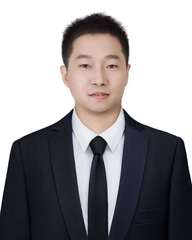 |
段晓华 |
|
|